These are the six most common ways a Cape Coral pool loses water, and what the local, licensed specialist we connect you with will check and fix.
- Pool Leak Detection
- Underground Plumbing Leaks
- Pool Light Leaks
- Skimmer Leaks
- Cracks, Tile & Main Drain Leaks
- Spa & Hot Tub Leaks
Pool Leak Detection in Cape Coral, FL

Pool leak detection is the process of finding exactly where your pool is losing water, without guessing and without breaking up concrete to go looking. It is the first step in fixing any leak, and in Cape Coral it is worth doing right, because many leaks sit under decks, inside light niches or along plumbing lines buried in sandy fill.
Signs your pool may be leaking
- You add water more than once or twice a week, even in cooler months
- The level drops more than about a quarter inch a day
- Your water bill jumped and the pool is the only change
- Chemicals are not holding, or algae keeps coming back
- Wet spots, soft soil, sinking pavers or cracks around the deck
- Air in the pump basket or bubbles from the return jets
- The water level stops dropping at the same point every time
How a leak specialist finds the leak
A typical visit starts with questions about how fast you are losing water and whether the loss changes with the pump on or off. That alone narrows things down: losing more with the pump running points toward the pressure side of the plumbing; losing more with it off points toward the suction side or the shell.
Next comes a pressure test of each line: returns, skimmer, main drain, spa and cleaner lines. Each line is plugged and pressurized; a line that will not hold pressure has a leak. Then comes a dye test, where colored dye is released near the light, skimmer throat, returns, steps, tile line and any cracks. If water is escaping, the dye gets pulled toward the leak. For buried lines, electronic listening equipment helps locate the leak under the deck so only a small area needs to be opened.
You should come away knowing where the leak is, what caused it, and what the repair involves. Many simple leaks, like a light conduit, a skimmer crack or a return fitting, can be sealed during the same visit.
Why not drain the pool and look?
Draining is the wrong move in Cape Coral. The water table sits close to the surface, especially in the rainy season, and an empty in-ground pool can be pushed up by groundwater pressure. That is called a pool "popping," and it is an expensive mistake. Leak detection is done with the pool full and running normally.
Who you will be connected with
When you call, you reach an independent, licensed and insured local pool leak specialist serving Cape Coral and Lee County. Leak detection itself can be done by trained specialists; repairs to pool plumbing or the pool shell in Florida are handled by licensed pool contractors, and the specialist will tell you which applies to your repair.
Underground Pool Plumbing Leak Repair in Cape Coral
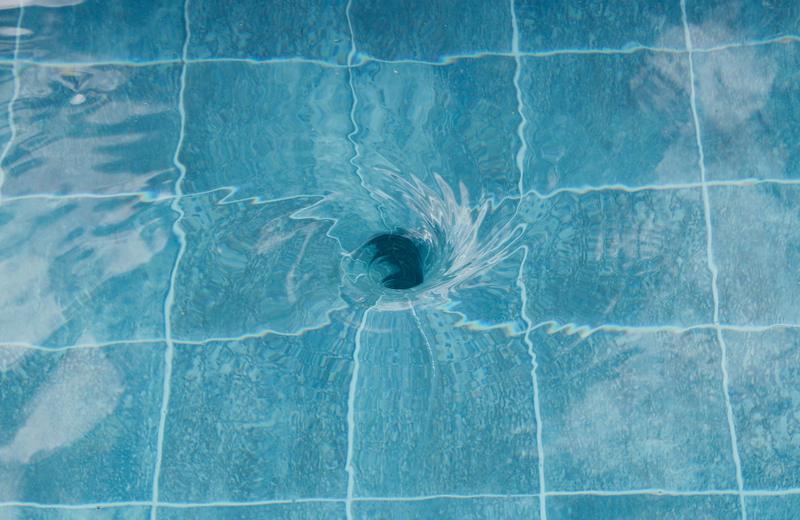
Your pool's plumbing runs from the equipment pad, under the deck, and into the pool: return lines that push water back in, suction lines from the skimmer and main drain, and often spa and cleaner lines. When one of those cracks or a fitting separates, water leaks into the ground where you cannot see it.
Why buried lines leak in Cape Coral
- Sandy, shifting soil. Fill under decks settles and moves, stressing glued PVC joints over time.
- Heat cycles. Pipes expand and contract with Florida's temperature swings, and fittings work loose.
- Storms and saturated ground. Heavy rain and hurricanes like Ian move soil and can crack lines near the deck edge.
- Tree roots and construction. Landscaping, pavers and additions can damage lines that were never mapped.
Clues it's a plumbing leak
If you lose noticeably more water with the pump running, a return line is a prime suspect. If you see air in the pump basket or the pump struggles to prime, look at the suction side. Wet or sinking spots on the deck between the equipment and the pool are another giveaway.
How it's found and fixed
Each line is isolated and pressure-tested to find the one that fails. Listening equipment then pinpoints the leak under the deck. Instead of removing a whole section of pavers or concrete, the repair crew opens a small access hole, replaces the damaged pipe or fitting, pressure-tests again, and restores the deck. Pavers can usually be lifted and reset; poured concrete or coated decks need a patch.
Plumbing repairs on a pool are work for a licensed Florida pool contractor. The specialist we connect you with will either handle it under their license or coordinate with a licensed contractor.
Don't wait on this one
Water leaking under a deck carries sand with it. Over months that leaves voids, which lead to cracked decks and sinking pavers that cost far more to fix than the original leak.
Pool Light Leak Repair in Cape Coral
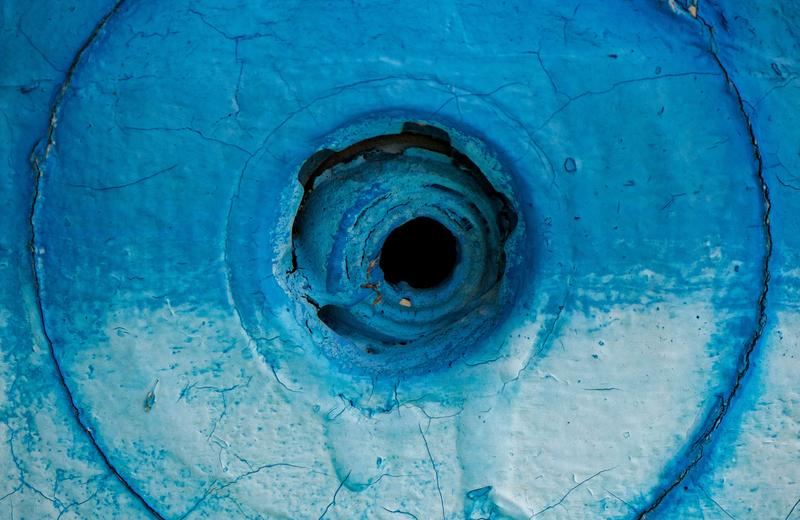
The underwater light is one of the most common places for a Cape Coral pool to leak, especially in pools more than ten or fifteen years old. The light sits in a metal or plastic housing called a niche, and a conduit runs from the back of the niche to a junction box on the deck. Water can escape through that conduit, around a cracked niche, or past a failed seal.
The telltale sign
Let the pool sit without adding water. If the level drops and then stops right around the middle of the light, the light is very likely your leak. A specialist will confirm it with dye: a few drops released near the conduit opening behind the fixture will get pulled in if water is escaping.
How light leaks are repaired
Most light leaks are fixed without draining the pool. The fixture is unscrewed and lifted out onto the deck on its cord. The conduit opening is then sealed with a pool-grade sealant or a conduit plug, and gaps or cracks in the niche are repaired with underwater epoxy. If the niche itself is badly cracked, it may need to be replaced, which is a bigger job.
If your light is old, the specialist may suggest replacing it with an LED fixture while it is out. That is optional, but it saves a second trip later.
Safety note
Pool lights involve electricity and water. Do not open the fixture yourself. Electrical work on pool lighting should be done by a qualified, licensed professional.
Pool Skimmer Leak Repair in Cape Coral
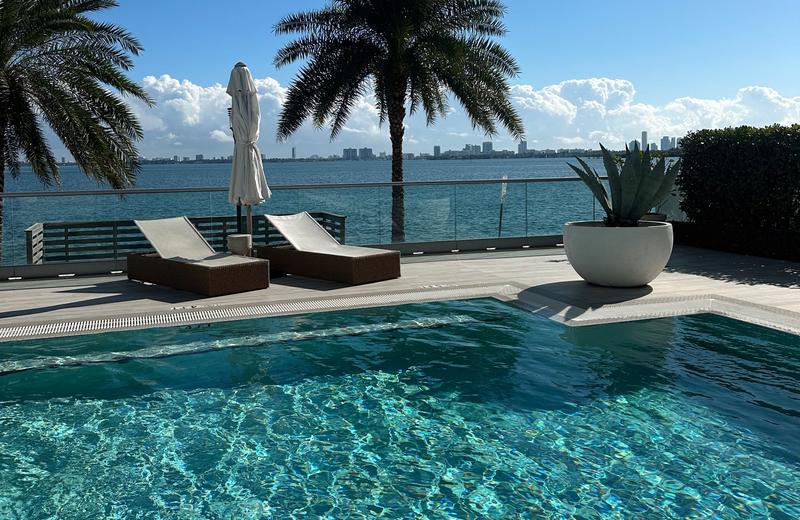
The skimmer is the opening at the waterline that pulls surface water and debris into your filter. Because it sits right where the pool shell meets the deck, it takes the most stress from ground movement, deck settling and Florida's heat. Cracks and separations at the skimmer are among the most common pool leaks we hear about.
Signs it's the skimmer
- The water level stops dropping at the bottom of the skimmer opening
- A visible gap or crack where the skimmer meets the tile or deck
- Wet soil or a sinking paver next to the skimmer
- Air in the pump basket when the water is low
How it's repaired
A specialist dye-tests around the skimmer throat, the faceplate and the line below it. Small cracks and separations can be sealed with flexible pool sealant or epoxy, often underwater. A skimmer that has pulled away from the shell, or a cracked skimmer body, may need to be partly or fully replaced, which means cutting out the deck around it and resetting it. That is work for a licensed pool contractor.
If the line under the skimmer is leaking, it is pressure-tested separately, since a skimmer that looks fine can still sit on a cracked pipe.
Why it matters
A skimmer leak is usually slow, which is why it gets ignored. But it leaks every hour the water is above it, and it washes out the fill under the deck right next to the pool, where settling causes the most damage.
Pool Crack, Tile Line & Main Drain Leak Repair in Cape Coral

Not every leak is in the plumbing. Cracks in the pool shell, gaps at the tile line, worn step and bench joints, and old main drain fittings can all let water out slowly. In Cape Coral, settling soil, storms and age make these more common, and pools close to a seawall can see extra ground movement.
Common shell leaks
- Hairline and structural cracks in plaster, pebble or fiberglass
- Tile line gaps where the waterline tile meets the deck or coping
- Step and bench joints that separate over time
- Main drain fittings and covers at the deepest point
- Return fittings where the wall fitting meets the shell
Finding them
A specialist swims or dives the pool with dye, checking every crack, joint and fitting. Water escaping through a crack pulls the dye in. The main drain is tested both by dye and by pressure-testing its line.
Repairs
Surface cracks and small gaps can often be sealed underwater with pool putty or epoxy, without draining. Tile line gaps are cleaned and sealed with a flexible caulk made for pools. Larger or recurring cracks may point to a structural problem and need a licensed pool contractor to assess them. That can involve partially draining under controlled conditions, which in Cape Coral's high water table should only be done by a professional with a plan to relieve groundwater pressure.
After a hurricane, it is worth having cracks checked even if they look minor. Small cracks that start after a storm can grow over the following months.
Spa & Hot Tub Leak Detection in Cape Coral

An attached spa doubles the places water can escape: extra jets, a separate set of return and suction lines, a spillover edge into the pool, and often a blower line. Many Cape Coral pool homes have a raised or attached spa, and spa leaks are often mistaken for pool leaks.
Signs of a spa leak
- The spa drains down into the pool overnight
- Jets lose pressure or the spa won't fill properly
- The pool loses more water when the spa is running
- Cracks along the spillover or spa wall
How spa leaks are found
The specialist tests the spa separately from the pool: pressure-testing spa returns, suction and air lines, and dye-testing jets, the spillover and the spa light. A spa that drains into the pool overnight often points to a valve issue at the equipment pad rather than a true leak; one that loses water to the ground is a real leak.
Freestanding hot tubs
Portable hot tubs leak from pumps, heaters, unions and jet bodies inside the cabinet. If you see water under or around the cabinet, that is a different job, and some leak specialists handle it while others will refer you to a hot tub repair company. Mention it when you call.